The Universe in a Handful of Dirt
We were taught that plants eat fertilizer. The truth is stranger and far more wonderful: plants eat soil — but only because the soil is alive. This month, we kneel down and look closely at the ground beneath everything.
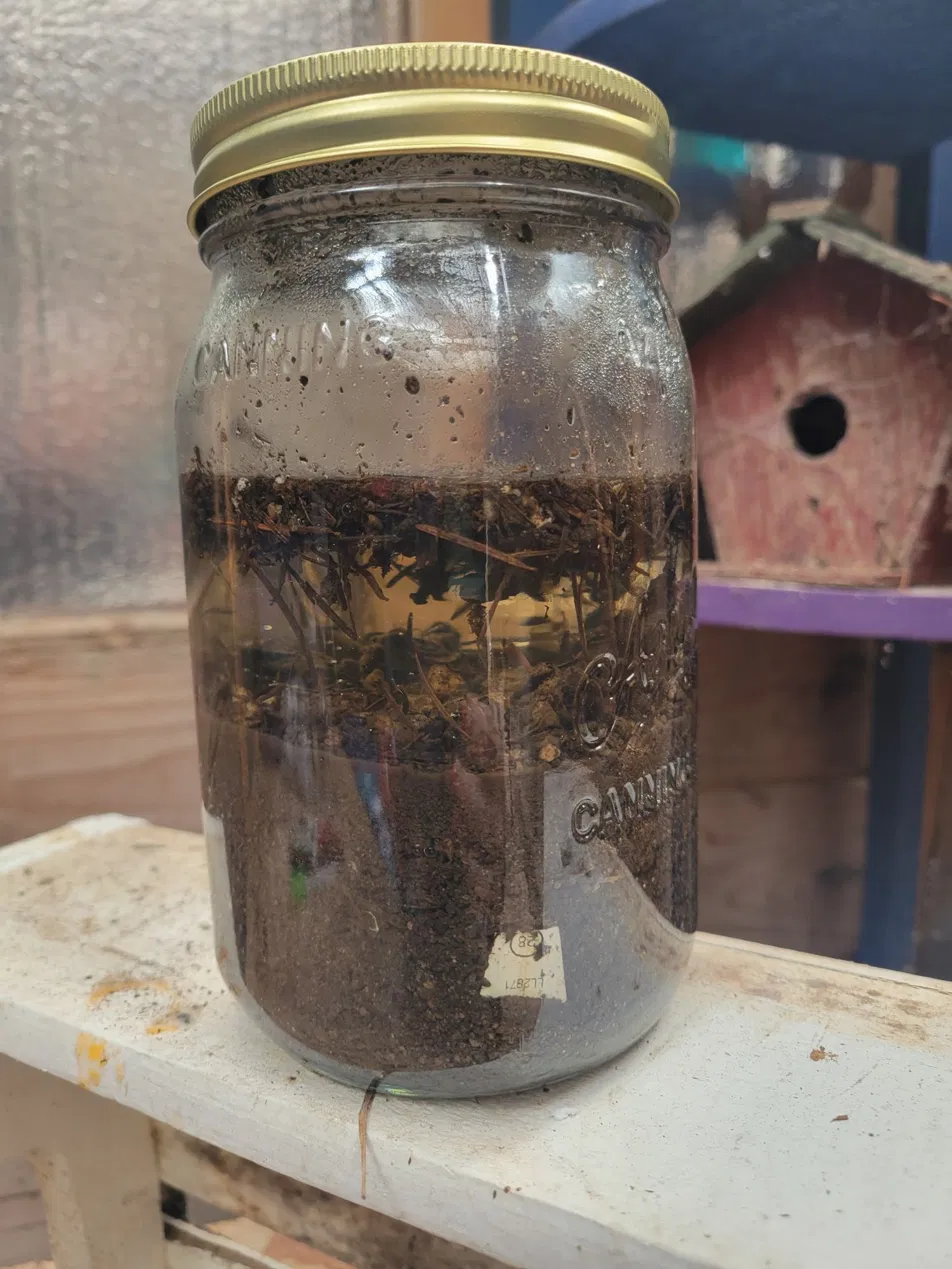
A jar soil test, settling into its layers. Butterthief Gardens, Olympia, Washington.
Kneel down and pick up a handful of it. Really look at it. What you are holding is not dirt — it is a universe. A single teaspoon of healthy garden soil contains more living organisms than there are people on Earth: billions of bacteria, miles of fungal threads, protozoa, nematodes, and creatures too small to see, all working together to sustain life.
Most of us were taught that plants eat fertilizer. The truth is far more beautiful. Plants eat soil — but only because the soil is alive. The living creatures in healthy soil transform raw minerals and decaying matter into exactly the nutrients plants need, delivered at exactly the right time. A plant in living soil is plugged into a network of relationships older than agriculture itself.
Dirt is not soil
Here is the distinction at the center of everything: dirt and soil are not the same thing. Soil is not ground-up rock. It is one of the most complex substances on Earth — a living mixture of minerals, water, air, organic matter, and billions of organisms. Dirt is what is left when that life has been driven out. The whole project of regenerative growing is the patient work of turning the second back into the first.
A healthy soil is roughly 45% minerals, 25% water, 25% air, and just 5% organic matter — plus a quantity of life too vast to measure. That last 5% is the master variable. Though small in volume, organic matter drives nearly everything: fertility, structure, the ability to hold water, and the suppression of disease. Depleted industrial farmland often holds well under 1% organic matter; thriving prairie soils historically held 5 to 8%.
The living world beneath your feet
Who lives down there? Bacteria, by the billion in every teaspoon — they fix nitrogen from the air, fend off disease, and produce geosmin, the earthy smell that tells you soil is alive. Fungi weave hyphae through the ground in networks spanning acres; the mycorrhizal fungi partner with the great majority of plant species, extending a plant’s effective root system many times over and trading water and minerals for sugars. And earthworms, the architects, each processing its own weight in soil daily and leaving castings richer than the ground around them.
“When you till deeply, you sever miles of fungal networks that took years to build. The mycorrhizal web does not rebuild overnight.”
This is why the single most important shift in how we treat soil is to stop treating it as inert. Once you understand who lives in your soil and what they do, you stop thinking about feeding your plants and start thinking about feeding your soil — because a living soil feeds plants far more effectively than any bag of fertilizer ever could.
The irreplaceable few inches
Nearly all of this life concentrates in the top six to twelve inches of ground — the topsoil. And here is the sobering part: it takes nature 500 to 1,000 years to build a single inch of it. The United States loses on the order of a billion tons of topsoil to erosion every year. If that were the whole story, it would be a story of slow catastrophe.
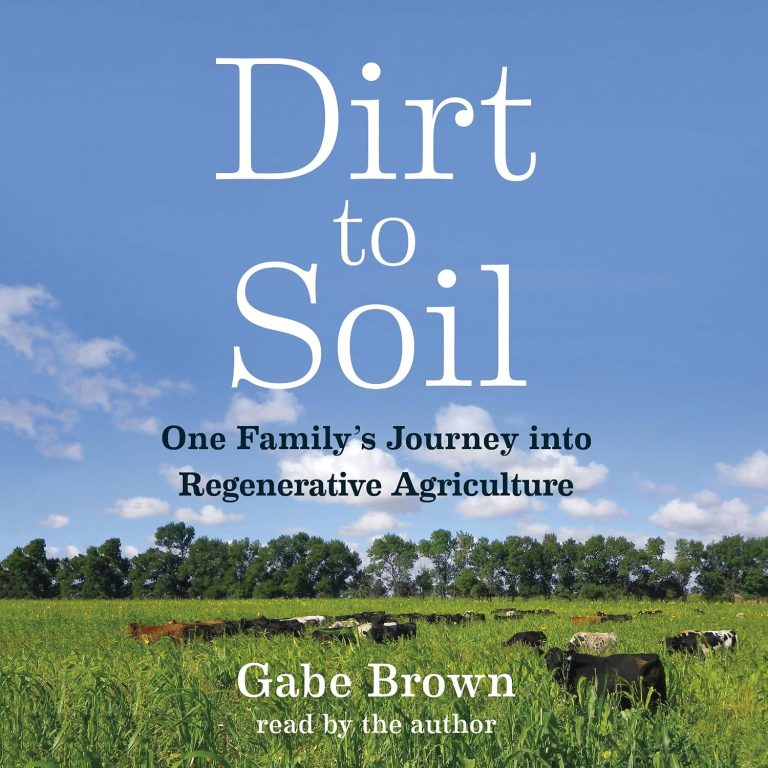
But it isn’t the whole story, and that is the hope this issue is built on. The remarkable discovery at the heart of the regenerative movement is that topsoil can be rebuilt — not over centuries, but within a single human lifetime. Gabe Brown grew several inches of new topsoil on his North Dakota ranch in about twenty years. University of Washington researchers measured topsoil thickening by nearly a centimeter a year under regenerative practices. The ground, given half a chance, wants to come back to life.
Where to begin
You do not need a ranch, or even a big yard. You need only to change the way you see the ground — and then to do a few simple things, again and again: keep the soil covered, never let it sit bare. Disturb it as little as possible. Keep something living and rooted in it as much of the year as you can. Feed it compost and let the biology do the rest. These are the same principles that rebuilt Gabe Brown’s 5,000 acres, scaled down to a single bed.
That is the work, and it is genuinely joyful work. Every shovelful of compost, every bed you keep covered, every cover crop sown in autumn is an act of trust in an ancient intelligence. The soil knows what it needs. Our job is to listen — and, as we always say around here, to cite our sources carefully along the way.