The Roof That’s Alive
Imagine looking out your window and seeing a meadow where a shingle roof used to be. That’s a green roof — a living layer of plants on top of a building — and it might be the most charming way there is to hand a little habitat back to the wild.
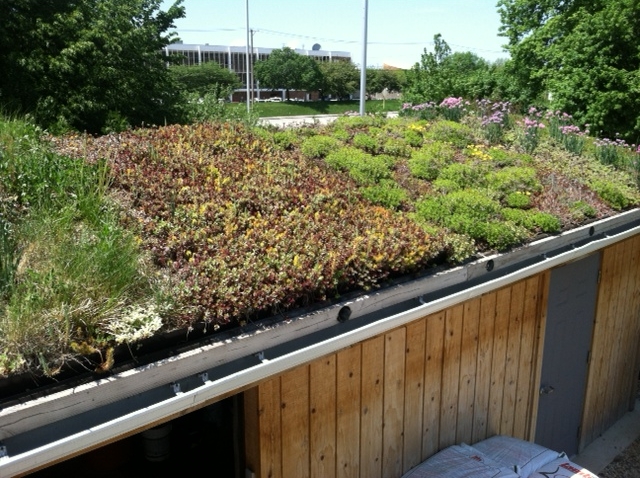
A garden shed wearing a living roof. Photo: Newtben33, CC BY-SA 3.0, via Wikimedia Commons.
A green roof is exactly what it sounds like: a roof you plant. Instead of shingles or metal baking in the sun, you’ve got a shallow garden up there — usually tough, drought-happy plants like sedum, wildflowers, and grasses — growing in a thin layer of special soil. People have been doing it for centuries (think sod roofs in Scandinavia), and it’s having a well-deserved comeback.
Here’s why it’s more than a pretty idea. A living roof pulls real weight. It soaks up rainwater instead of dumping it into the storm drain — extensive green roofs can hold back the majority of a rainfall, easing the load on creeks and sewers. It insulates the building beneath it, evening out heat and cold. It muffles noise. It protects the actual roof membrane from sun and weather, so the roof lasts longer. And — the part we care most about around here — it becomes habitat. In a world where ground-level green space keeps shrinking, a planted roof is a fresh patch of refuge for bees, butterflies, and birds, stitched into the map right where there was nothing before.
What’s actually up there: the layers
A green roof isn’t just dirt dumped on shingles — that’s a leak waiting to happen. It’s a little stack of layers, each with a job. From the bottom up: the roof deck (the structure itself), a waterproof and root-proof membrane (so water and roots can’t get into the building), a drainage layer (lets extra water escape), a filter fabric (keeps soil from washing into the drainage), the growing medium (a lightweight engineered soil, not heavy garden dirt), and finally the plants on top. Here’s the whole thing in one picture:
The stack that makes a living roof work. Each layer has one job; together they keep the building dry and the plants alive.
Two kinds: light and heavy
Green roofs come in two flavors. An extensive roof is the light one — a shallow few inches of soil, planted with sedum and tough little ground-huggers, low maintenance, light enough that many existing buildings can carry it. An intensive roof is the heavy one — deep soil, big plants, even small trees, basically a rooftop park, but it needs serious structural support and real upkeep. For most of us, and for most small buildings, extensive is the way: lighter, cheaper, and still buzzing with life.
“Look out the window and see a meadow where a roof used to be.”
Starting small (and why that’s smart)
You don’t begin a green roof on your house. You begin on something small and forgiving — a shed, a little garden structure, a tea-house-sized building where a leak would be a lesson, not a disaster. Start small, learn how the layers behave through a wet season and a dry one, and you’ll know exactly what you’re doing by the time you tackle something bigger. There’s a real plan in the works to put a living roof on a small structure here on the property, precisely so the view out the window is green instead of gray — and so we can learn the craft on something little before going bigger.
And it ties straight into everything else this month: a green roof is living soil (thin, but alive), growing native plants, feeding insects, sheltering birds — the whole food web from our cover story, lifted up onto a rooftop. One more patch on the map. One more piece of the yard brought back to life, even when the “yard” is six feet off the ground.
Full Step-by-Step in Resources
We’re putting a complete, beginner-friendly green roof build guide in the Resources section — layers, materials, plants, and all.
Visit the Resource Shelf →