The Man Who Learned to Read the Ground
Dirt to Soil: One Family’s Journey into Regenerative Agriculture
In Dirt to Soil, North Dakota rancher Gabe Brown tells the story of how four years of catastrophe forced him to stop fighting his land and start listening to it. It has become the founding text of the regenerative movement — and it reads like a conversion story.
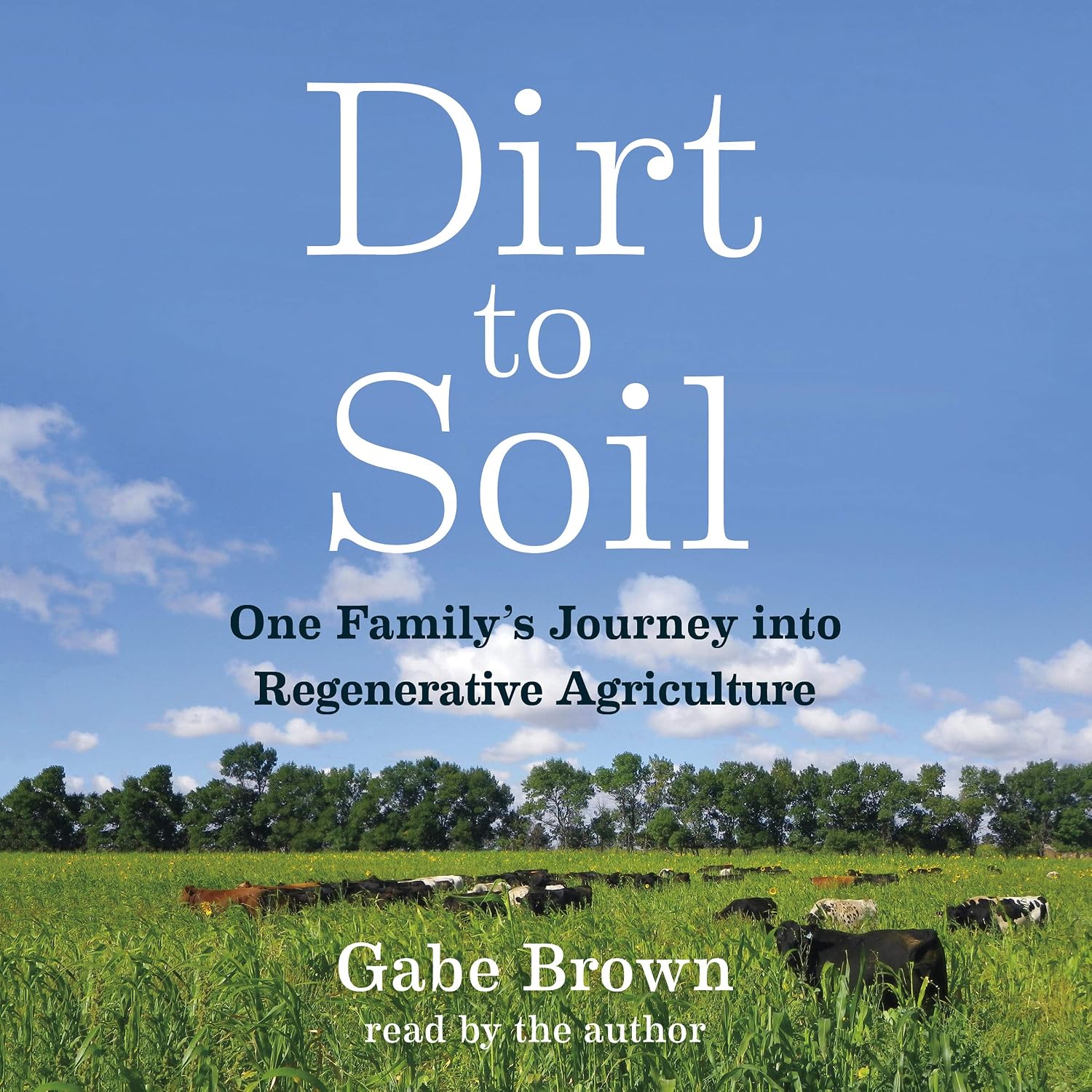 Cover courtesy of Chelsea Green Publishing
Most farming books are manuals. Dirt to Soil is something closer to a testimony. Gabe Brown does explain, in patient and practical detail, how he rebuilt the living soil on his 5,000-acre ranch near Bismarck, North Dakota. But the spine of the book is a story of failure so complete it left him no choice but to change everything he believed.
Between 1995 and 1997, the Browns lost nearly everything. Hail destroyed their entire crop two years running. Then a brutal spring — record cold and a three-day blizzard — killed many of their calves. Brown was deep in debt, unable to afford the synthetic fertilizers and chemicals the industrial model demanded. And it was precisely because he couldn’t buy his way back to “normal” that he started doing things differently.
What he discovered over the next twenty years is the heart of the book, and the heart of this whole month’s issue: that dirt and soil are not the same thing. Dirt is what you have when the life has been farmed out of the ground. Soil is dirt that has come back to life. The difference is biology — the bacteria, fungi, worms, and roots that turn lifeless mineral into a living system. Brown’s gift is showing that the transformation from one to the other can happen in a human lifetime, on real land, while turning a profit.
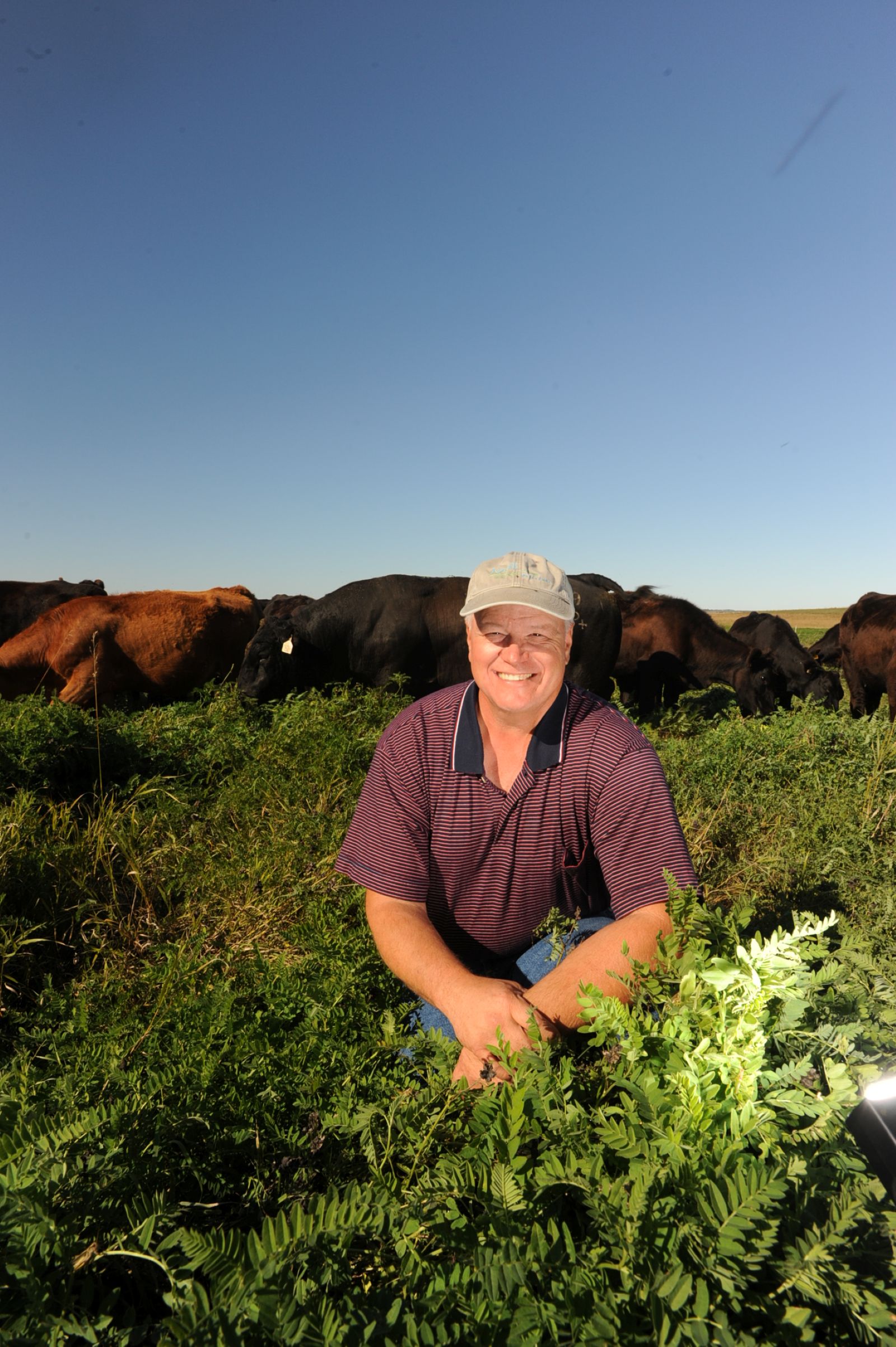
Gabe Brown. Photo: Larry Reichenberger.
The five principles
Brown distills decades of trial and error into five principles of soil health, which he is careful to credit to soil scientists Jon Stika, Jay Fuhrer, and Ray Archuleta rather than claiming as his own. They are deceptively simple: limit disturbance (stop tilling, stop dousing the ground in chemicals); keep the soil covered at all times; cultivate diversity of plants and animals; keep living roots in the ground as much of the year as possible; and integrate animals back into the land.
If you read this newsletter’s companion guide, these will sound familiar — they are the backbone of regenerative growing at every scale, from a 5,000-acre ranch down to a backyard bed. That is exactly Brown’s point. The principles are not a prescription; they are a way of seeing.
“If you want to make small changes, change the way you do things. If you want to make major changes, change the way you see things.”
That line — spoken to Brown by Canadian rancher Don Campbell — is the hinge of the entire book. Brown writes that when he heard it, “it was like a light went off in my head.” He had been making small changes and praying for big results. The breakthrough came when he stopped tinkering and changed his whole way of looking at the land.
What’s strong, and what to know going in
The great strength of Dirt to Soil is that it was written by someone who actually does this work — not a journalist, not a professor, but a farmer who lives and breathes it, and who nearly went broke learning it. The advice is concrete. The voice is plainspoken and warm. And the results are documented: Brown rebuilt soil organic matter from under 2% to over 6%, and water infiltration on his land went from a fraction of an inch per hour to many inches.
A fair warning for the home gardener: this is a book about a working ranch, so some chapters dwell on cattle grazing and acreage that won’t map directly onto a vegetable patch. Don’t let that put you off. The principles scale down beautifully, and Brown says so himself. Read it for the way of seeing, not for a step-by-step garden plan — for that, our own soil guide is the gentler on-ramp.
By the last page, the title has quietly rearranged itself in your mind. Dirt to Soil is not just a description of what Brown did to his land. It is a description of what the land did to him — turning a conventional farmer, through loss, into one of the most influential voices in American agriculture. The ground was the teacher. He simply, finally, listened.