From Mud
to Medicine
We had a corner behind the Lilac House that stayed muddy all year. Here’s how we turned it into a small pond with a fig tree and an herb bed, without disturbing the frogs who already lived there.
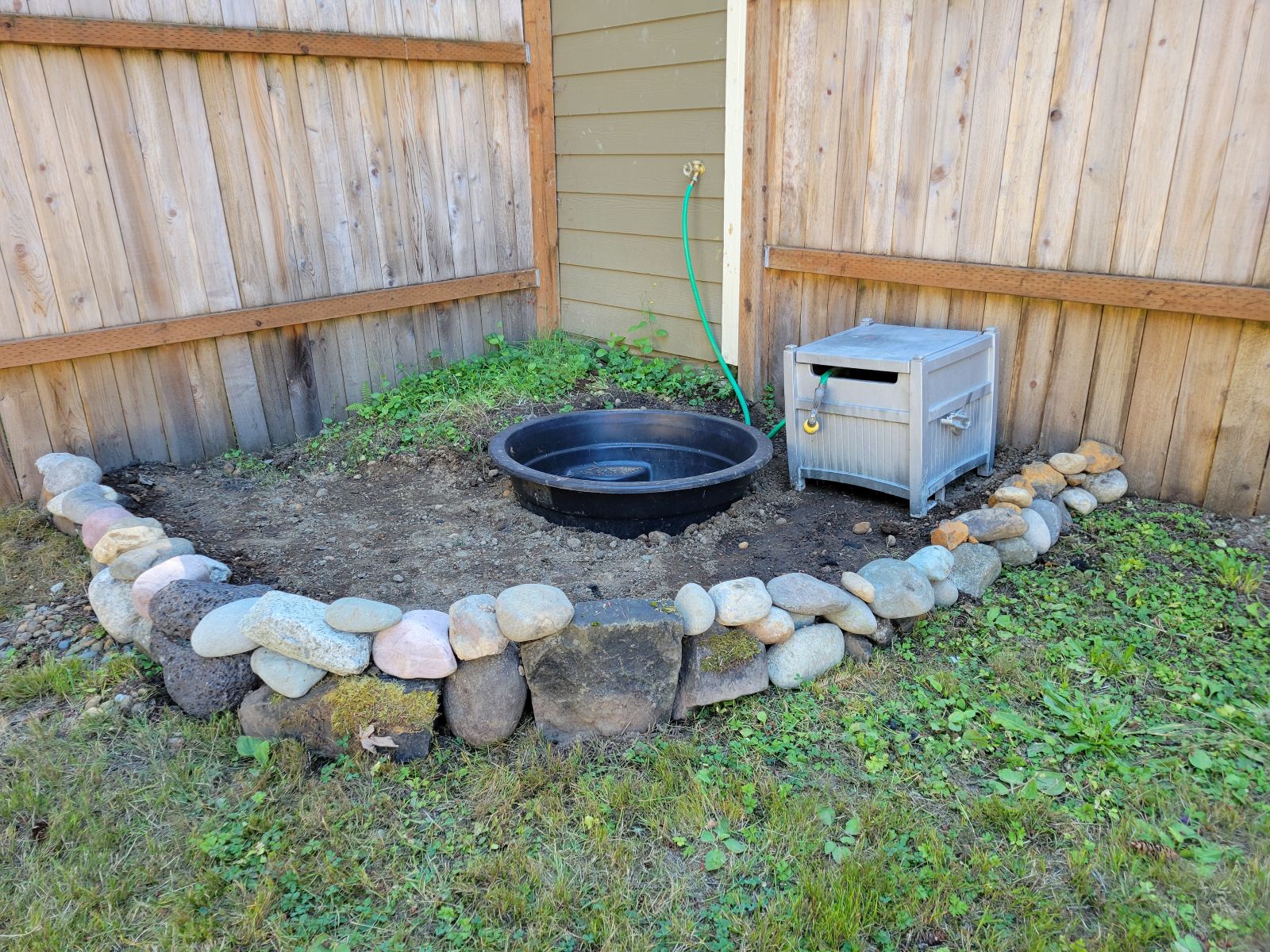
The corner behind the Lilac House, framed and leveled with a ring of stones. The green patch in the back corner is where the frogs live, so we left it alone.
The spot that never dried
Behind the Lilac House there was a patch of ground that stayed wet in every season. It was as wet in August as in March, the kind of mud that pulls your boot right off.

My grandson never wanted the mud gone.
For a long time I just wanted it gone. Eventually it dawned on me that the mud was telling us something. Water was coming in faster than the ground could soak it up, and it had nowhere else to go.
So we decided to give the water a place to go. We never expected that corner to become one of our favorite spots on the property.
Where the water came from
Our well water is heavy with iron. If you’ve lived with iron water, you know the orange stains on the sinks and the metallic taste.
To clean it up, the pumphouse runs a filtration system: a small injection of chlorine to help the iron drop out, and tall backwashing filter tanks, each about the size of a water heater. Every day those filters flush themselves clean, and every day that flush water drained to the same low spot.
The chlorine is a tiny amount and it dissipates quickly once the water meets air, soil and sunlight. The bigger problem was how much water there was. A daily flush, on top of our Northwest rain, kept that ground saturated all year.
The frogs were here first
My favorite part is that the frogs found that mud long before we did anything about it. They had been living in that damp corner all along.
Before we started digging, we agreed to leave their area alone. We worked around it and didn’t dig, clear or tidy any of it.
It made me think differently about fixing land. The frogs had already picked this spot, and our job was to make it better for them and for us without pushing them out.
“Our job was to make it better for them and for us, without pushing them out.”
Building the gravel donut
Picture a small pond sitting in the hole of a gravel donut. The pond catches the water, and the gravel ring takes whatever spills over and lets it soak slowly into the ground.
- Clear and frame. We pulled out the larger debris, then laid a circle of rocks to level the gentle slope and frame the area.
- Level the inside. We leveled the ground within the rock ring and dug down about a foot.
- Dig for the pond. We dug a hole for the pond so its rim would sit level with the rocks, and level all the way around. Otherwise water spills out of one low side.
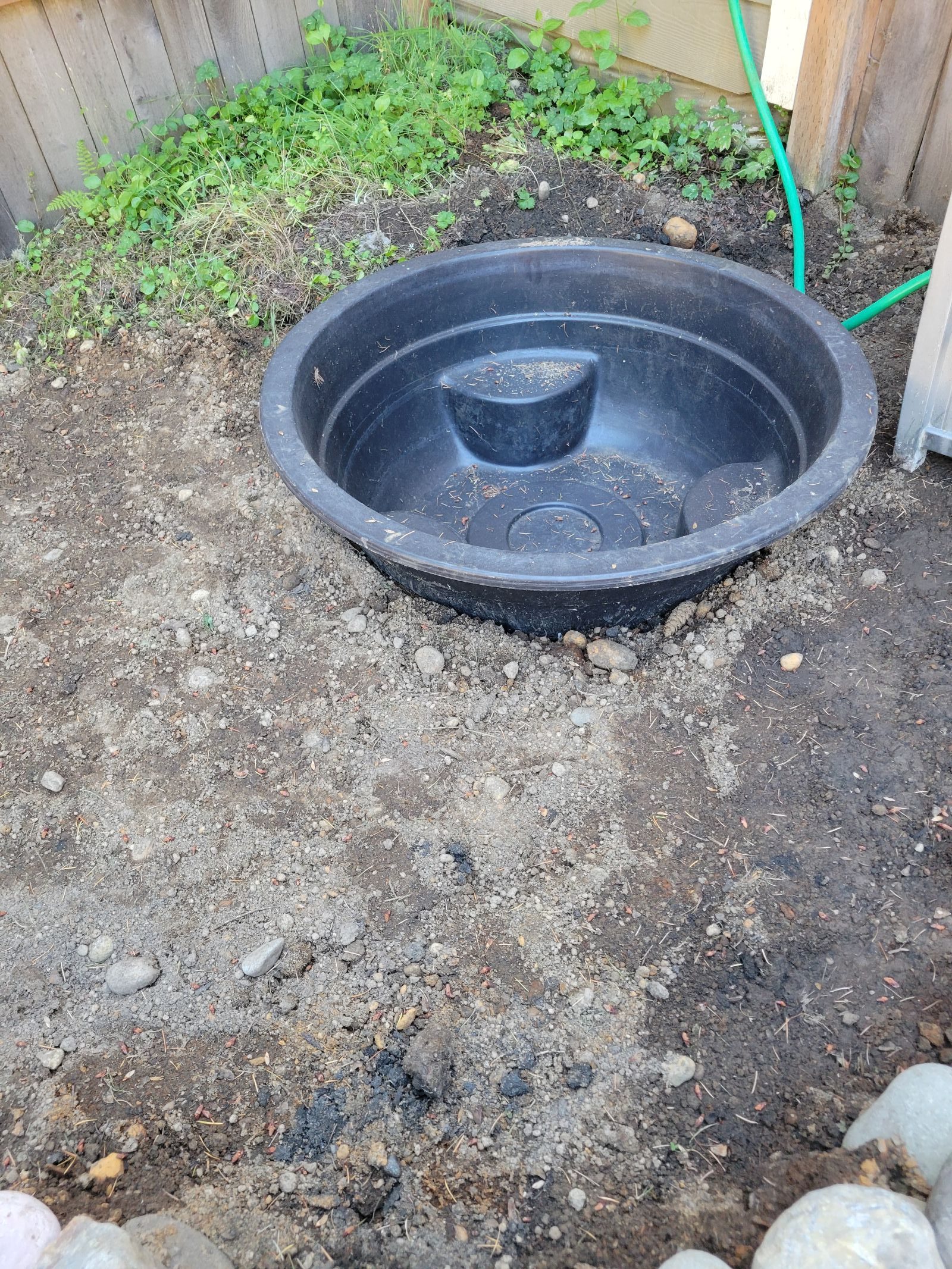
Setting the pond so the rim sits level all the way around.
- Lay the gravel bed. We dug about 6 inches deeper and filled that with 6 inches of 5/8″ crushed gravel.
- Set the pond. The pond went in on top of the gravel bed, about 16 inches deep.
- Build a temporary form. Around the pond we set a thin, flexible edge (old vinyl flooring or 1/4″ plywood) about a foot out, to hold the gravel while we poured.
- Fill the donut. We poured gravel into that ring, all the way down to the bottom of the pond. Now there are 6 inches of gravel under the pond and a foot of gravel around it.
- Let the sky fill it. We didn’t fill the pond with a hose. Rain and runoff do that.
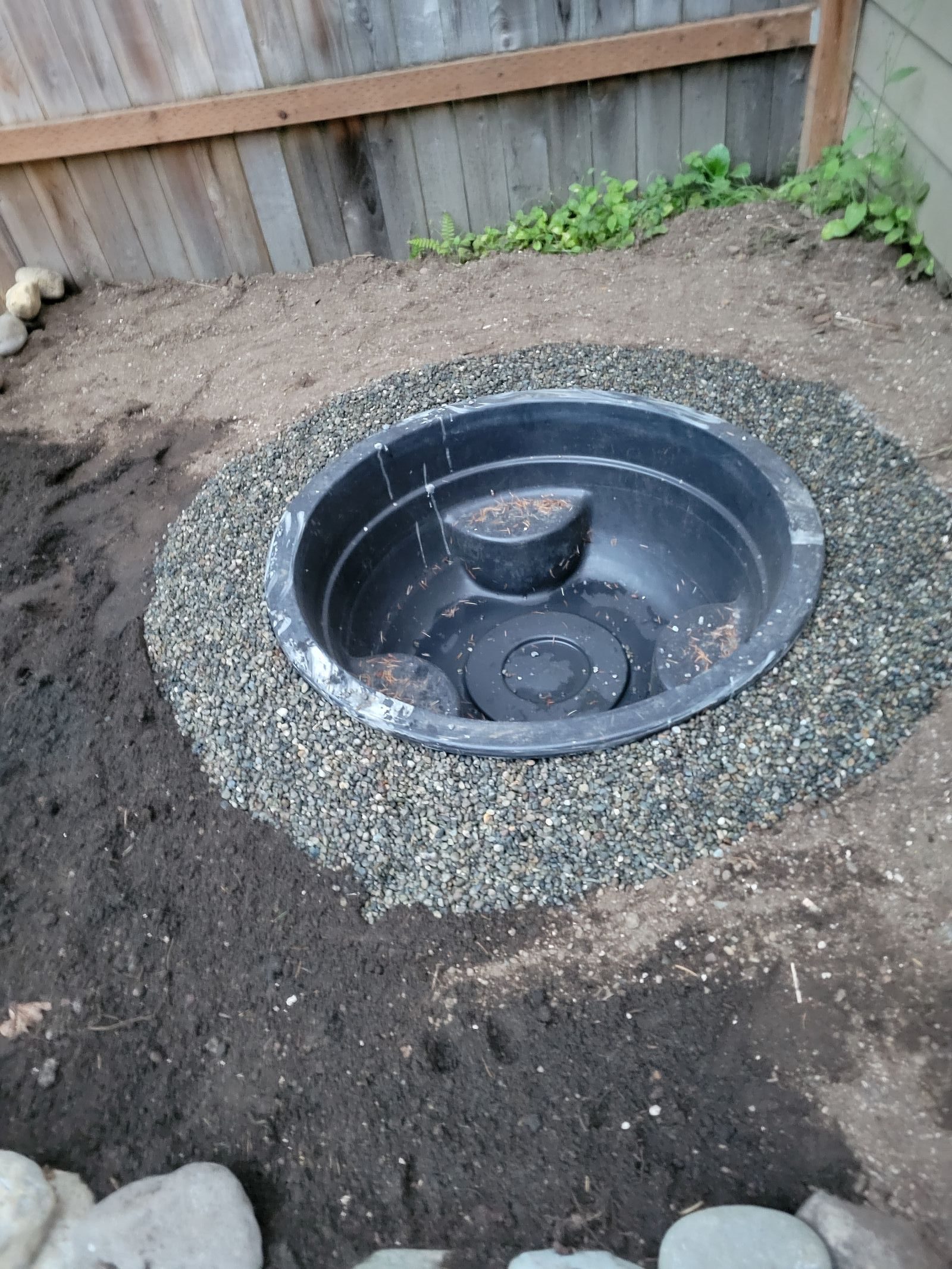
The gravel donut: a foot of gravel around the pond and six inches beneath it.
The daily backwash now runs into the pond. When the pond is full, it spills into the gravel ring and sinks into the ground, instead of running across the yard like a little stream and turning everything to mud.
From mud to medicine
Once the water had somewhere to go, we could finally use the ground around it. We planted a fig tree, mostly because we love figs.
Around it we planted medicinals we harvest, like comfrey and feverfew. Now we come back from that corner with a full basket instead of muddy boots.
The frogs are still there, the flowers filled in, and the water that used to make a mess now keeps the pond, the fig and the herbs going.
If you have a soggy spot
- Find the source first. A spot that stays wet in dry weather is being fed by something: a downspout, a spring, a filter flush. Follow the water before you dig.
- Look before you dig. Check who already lives there. Frogs, salamanders and insects often move into wet ground before we notice. Work around their corner.
- Give the water room to spread out. Gravel lets water spread out and sink in slowly instead of running across the surface.
- Keep it level. A pond that sits even a little crooked will always spill out its low side.
- Know what’s in your water. If you have a water softener, find out whether it uses salt. Salty brine is hard on soil and on frogs, so keep it away from ponds and plantings. Iron water can leave orange deposits in gravel over time, so check your drain each spring.
- Let rain do the filling. A pond filled by rain and runoff settles into the land on its own schedule.
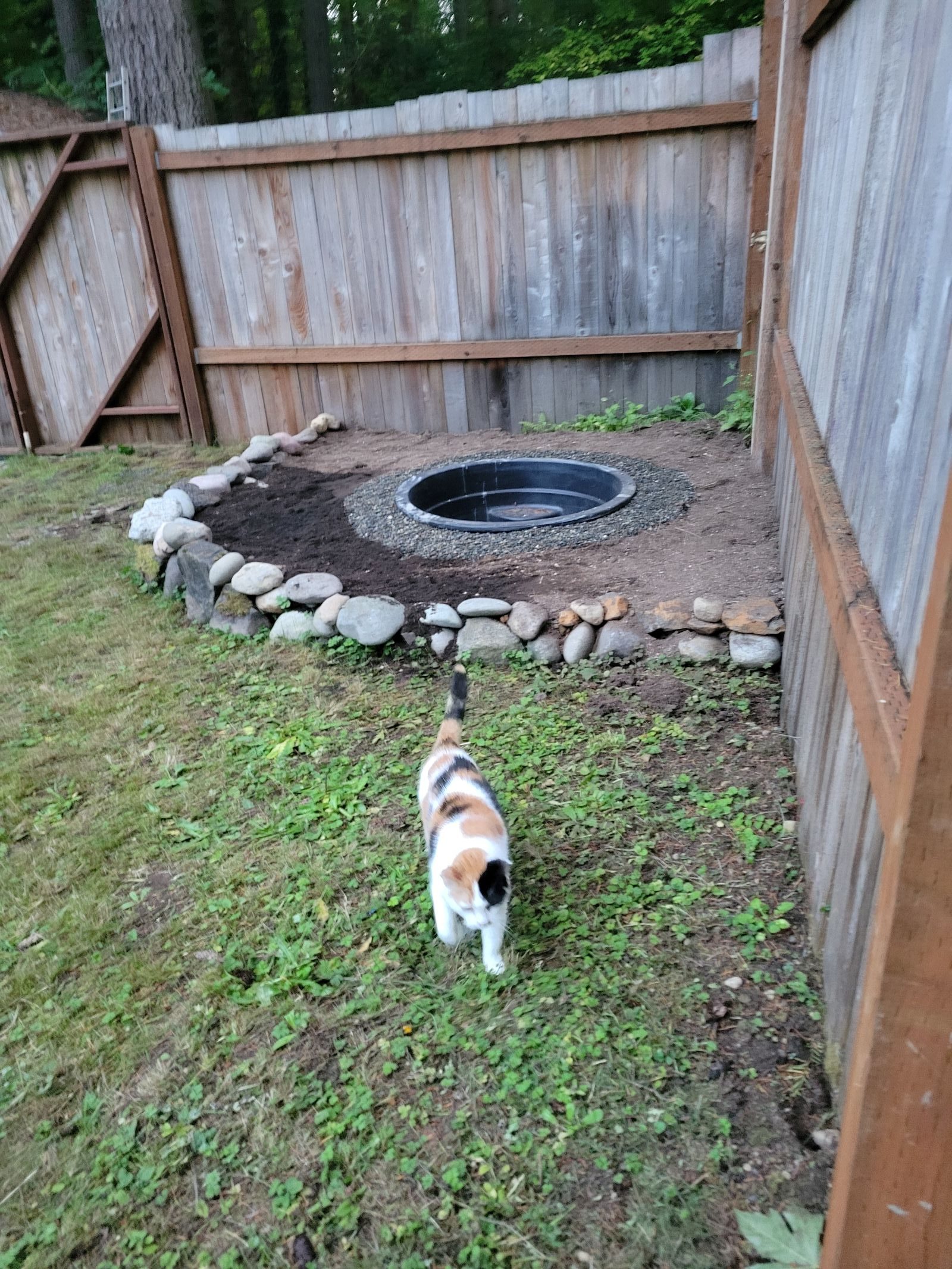
Sora, 20 years old and still in charge of inspections, approves.